Showing posts with label crate. Show all posts

Thursday, October 6, 2011

Dog Safety- Riding in cars

There comes a time in every dog and owner’s life when it becomes necessary to take a trip in the car. Whether your dog loves car rides or hates them, there are some important things to consider in order to make the ride safe for both of you.
It’s easy to let dogs just hop in the car and be about our business, however, dogs need to be restrained somehow when riding in the car for safety reasons. Just like children and yourself, you make sure you’re buckled up every time you ride in the car. There are three primary ways to do this for dogs; with a crate, a divider, or a safety harness. Like with young children, dogs should not be allowed to ride in the front seat as the air bags could severely injure or kill them.
Consider the following situation: You have your two dogs loose in the back seat on the way to the park when a car runs a red light and hits you in an intersection. You are unconscious and pinned in your seat from the impact. One dog flew into the window, leaving smashed glass and blood in the back seat. The other dog was thrown into the floorboard and is also pinned there. Paramedics arrive and try to get you out. Without noticing the dogs, they open the back door to get inside the car to get to you, and let the scared and injured dog out of the car. The dog runs into the street and escapes into traffic. As the paramedics begin to assess the situation, the dog in the floorboard begins to get anxious. He is scared and trapped. Dogs act unpredictably when under duress and may try to bite someone trying to save your life, or in an effort to protect themselves from a perceived threat. He begins to growl at the paramedics. To avoid being bitten, the paramedics back off and call animal control to secure the second dog and retrieve the first. They are unable to help you while they wait. Animal control arrives, snares the dog in the floorboard, and keeps it from lashing out at the paramedics. They get you free. When you wake up in the hospital you are informed that one dog ran into the street and caused an accident where it was hit and killed and the other dog was deemed vicious by animal control for its behavior in the car and is in their custody. They want to put him to sleep.
Dogs can also cause distraction, leading to careless driving choices. They can also physically get in the way of us operating the vehicle properly. Can you imagine a small dog crawling under the brake pedal or a big dog trying to get in your lap? What a nightmare that would be.
These situations could be prevented, or at least reduced, with a few protective safety measures.
Crates
I have discussed the different kinds of crates before and mentioned that the plastic kinds are the safest for use while travelling. You can use the wire crates, but they are not nearly as secure, especially since they are designed to collapse. There are custom designed crates made for your car and for safety, however, they are not as widely affordable or as common as plastic crates. These crates can be placed in the backseat of a car or SUV, or in the cargo area of an SUV or truck for your dog to ride in. In the case of an accident, like the situation above, crates are by far the safest tool. Dogs can become projectiles if not secured. The hard plastic keeps the dog from flying everywhere in the event of a collision and it actually protects the dog’s body from a crushing impact. The dog will get banged up a bit, but inside a crate, there’s not very much distance to fly. If paramedics are necessary, they can remove the crates without fear of being bitten and wasting valuable time. The doors and hinges could break open, but these crates were designed for safety and even if damaged, they are supposed to remain functional. As with any safety product, they can fail under the right conditions, but having them available is much better than the alternative. Crates offer protection for both you and your dog, as well as a reasonable assurance as to their location as well as making them easier to notice.
Crates, when used for car travel, should be properly secured inside the car, much like a car seat. It does not do much good to have a crate as a projectile instead of a dog, so make sure they are fixed tightly to the seat or other strong anchor point.
Harnesses
As owners become more aware of dog safety issues, new products have been developed, including car safe harnesses. Some have even been crash tested. These harnesses are unlike typical dog walking harnesses because they provide extra support and cushion across the center of the dog’s chest. In the case of sudden braking or an accident, the dog’s weight would be thrown against the front of the harness. Regular harnesses would not give the necessary support to keep the dog from injury and could even cause an injury to the dog’s legs, neck, or shoulders.
Harnesses are a good answer for those with small cars, large dogs, multiple dogs, or a combination of these things where keeping crates in the car for rides is not practical or possible. To use a harness, make sure that is adjusted to your dog and fits well. It should not be constricting or cause a painful bind for your dog in its “armpits”. You should be able to slip one or two fingers under the back and chest of the harness. The goal is to protect the dog, not make it uncomfortable, so make sure that he/she can stand up, lie down, and sit comfortably while wearing it. You will also need to get a secure way to tether your dog inside the car. I like products that snap into the seat belt receivers and clip onto the harness. Make sure that whatever method you use can withstand the force of your dog’s weight and is appropriate for use inside your car. The harness does no good if the tether breaks.
The tether also ensures that your dog will not escape if the car door is opened and that it can only reach a certain distance, giving paramedics a certain “safety zone” in which to operate around a frightened dog. Tethers can also be purposefully cut or disconnected and used as a temporary leash to remove the dog, or the dog could be grabbed and lifted by the harness instead of having to touch the dog directly. While not necessarily ideal, in the situation above, a harness and tether would allow for some distance and options for those trying to help.
Barriers/Dividers
Car barriers and dividers help keep your dogs from reaching you in the front seat, providing a confined area for them to be. This is very useful for reducing distractions on the road. Some dividers are custom fitted for your make and model of vehicle. Others are a “one size fits most” product. Some are very flimsy and provide minimum protection. The problem with dividers is that if not appropriately sized or installed, they become ineffective in the event of a crash. Your dogs may not push hard enough to dislodge them, but an accident might knock it free and then you’d have not only flying dogs, but also a large metal barrier to worry about. Some can be fitted and installed specifically for your car and may be able to withstand such an impact. While this does keep the front area of the car accessible in the event of a collision, the back would be cut off from the front, even for paramedics. They may need that leverage from the back seat and an intact barrier could restrict their options. Also, the dogs could escape if the doors were opened or if the glass was broken. The barrier only keeps them from flying out the windshield or jumping into the front seat. It is safer than having loose dogs in the car, however, there is nothing holding the dogs back from escape or inflicting harm. Of course, if the barrier is between the cabin and the cargo area of an SUV (as pictured) instead of between the front and back seats, the benefits increase dramatically. Based only on the situation above, the outcome would probably have been very similar to what it was without any restraint at all. Barriers can be very useful in some situations and are certainly safer than having dogs loose in the car, however they are limited in their ability to restrain the dogs in an open car.
Other tips
To ensure no difficulties on your drive, start getting your dog acclimated to the crate or harness long before they ever set foot in the car with it.
Never leave an animal unattended in a car.
A sticker, magnet or window cling that indicates there may be pets on board could help alert paramedics to the existence of your pet.
Carry a copy of your dog’s vet records with you in the car. In the event that your pet is injured, it would help not only to know the animal’s history but to contact the regular vet for additional information or questions. If you have to leave your pet in a kennel or boarding facility, you will also need those records, which is why they are particularly necessary when travelling.
Do not allow dogs to ride in the backs of pickups unrestrained. It is illegal in most areas. Even if the dog is restrained, road debris can cause serious injuries to a dog that isn’t protected by a crate.
If you get a custom crate for your car, be sure that it meets certain safety expectations before proceeding.
As much as dogs love it, it is probably not a good idea to let them stick their heads out of the window, especially if you're going very fast (40+ mph). If even a small piece of debris hits them in the face, it could hurt a lot and potentially cause serious problems. Also, if the window is open wide enough, the dog could jump out. We all think "my dog would never do that", and then they see that squirrel or other dog and out they go.
Not all products are made equal. Do your research before deciding on a brand. Children's car seats have a minimum standard that they have to pass. Products for dogs have no such standard. Make sure what you're getting will do the job that you expect of it.
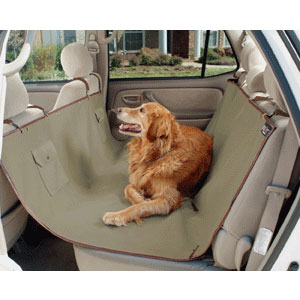
I use a dog sling/hammock seat cover to protect my car since one of my dogs gets carsick on occasion. This is not an acceptable barrier or restraint. Though quite useful, they require an additonal measure to be safe. The same goes for the elevated seats for smaller dogs. Those seats are often seen in the front seat of cars, however, I believe they should be put in the back in case of air bag deployment.

Friday, September 30, 2011

Simple Steps to a Crate-trained Dog

So you think crate training is a good idea, but don't know where to start? I've put together some simple steps and guidelines to help make crate training as painless as possible for you and your dog.

First, you'll need to choose your crate size and style. See the previous post for details.

The next step is to acclimate your dog to the crate, SLOWLY.

This is a step that many people forget. Some think that having a crate and having a dog is enough. You want the dog to like its crate. The crate is supposed to be your dog's safe haven, not a source of stress. You'll need plenty of treats or your dog's favorite toy, a positive attitude, and patience.

Your dog may breeze through these steps very quickly, especially if he's confident and motivated. However, some dogs are more timid and it could take hours, days, or weeks to really see a change in attitude about the crate. I will explain the steps as if your dog is timid, but keep in mind that not all dogs have problems with the crate and you may not have to do such small steps. Notice that as we move up a level in criteria, the minimum threshold resets. You have to build each one individually before you can expect your dog to do it all at once.

1. The crate means good things- Place your dog near the crate and sit next to it. Allow your dog time to sniff and investigate on its own. The crate may seem scary at first, so give your dog a little understanding. When your dog goes near the entrance, praise with a "yes!" or a "good boy/girl!" and give a treat or play with their favorite toy for a little while. This will associate being near the crate as a good thing.

2. Getting inside the crate- Now that your dog is comfortable near the crate, especially near the entrance, you want to reward for each small step inside. First reward for sticking his/her head inside. Then one paw. Then two paws, etc. Allow the dog to come out of its own will if it feels uncomfortable. Never force the issue. You can toss treats or toys inside the crate to encourage him/her to enter. Now is also the time to build a word to associate with going inside the crate. I use the word "inside" to tell my dogs to go get in their crates. The word is up to you, but be sure to say it each time your dog crosses the threshold into the crate (AS it enters) and soon your dog will be able to associate the word with the crate. Then, you can say it before it enters and your dog will understand.

3. Staying inside the crate- Now that your dog goes in and out without a fuss, you want to build up the time that he/she is comfortable remaining in the crate. Get the dog to go in as practiced, but keep tossing in treats to the back of the crate while the dog remains inside. If you sense your dog is stressed, let them come out. You do not close the door during this step. Gradually, slow your delivery of the treats. At first, to get the dog to remain in the crate, you may have had to give a treat every two seconds. Stretch it to giving a treat every five seconds, every ten seconds, every thirty seconds, every minute, etc. When your dog can consistently (5+ times) wait patiently in the crate for two minutes or more without a reward, it's time to move to the next step. Use your judgement, depending on how well your dog is doing.

4. Closing the door- Your dog is now comfortable around the crate and inside the crate for a short length of time. Don't slam the door in surprise as this will startle your dog. Gently close the door without a fuss. Don't make a big deal of it. Just do the same as you've practiced up until this point, but add the step of closing the door. At first, only close the door for a few seconds, then open it, give your dog a treat and allow him/her to come out if they want. If they don't come out, that's a good sign! To reset the situation, leave the room and allow them to follow. Don't make a big deal of getting out of the crate or they might start to think that outside is better than inside and not want to go back in. Just as before, gradually increase the time that the door is closed. Each time, give a treat and open the door. With patience, your dog should be able to remain inside with the door closed for five minutes.

5. Leaving the room- Staying in the crate might be easy with you around, but once you leave the room and the dog can't see you, it gets harder. After your dog has no problem staying in the crate with the door closed and you in the room, it's time to leave. Follow the exact same procedures you did before only this time, get up and walk out of the room, out of sight. The first time you do this, return immediately, treat, and open the door. Take your time in building up the length of time you're gone. By doing this properly, you make coming and going not a big deal and your dog is more likely to wait patiently for your return with the understanding that "this happens all the time" and "I know they'll come back". Leave for a few seconds, a few minutes, and then several minutes. Soon, getting in the crate, closing the door and walking away will be a piece of cake.

Other tips

Step 5 is useful for dogs who have separation anxiety, even if you don't use a crate. The more accustomed your dog is to your coming and going, the less of a big deal it is when you leave and the less stressed they'll be.

Puppies cannot physically hold their bladders as long as adult dogs. Their bodies just can't hold it in. As their bladders grow, you can expect longer from your puppy without accidents. A good rule of thumb is to use their months in age plus one to equal the maximum number of hours they can hold it. For example, a three month old puppy can probably only wait four hours before he must empty his bladder. The maximum for most dogs under normal circumstances is 8 to 10 hours. Never set your puppy up for failure by leaving him/her in the crate so long that there is no other choice but to have an accident. Come home at lunch, hire a dog walker, or have a neighbor or friend check on your puppy. It will help a great deal with the housebreaking process if your dog is not forced to have accidents inside.

Always have water available to your dog inside the crate. I use stainless steel bowls to prevent chewing, but there are bowls specifically designed to latch onto the sides of the crate which may help prevent spilling.

When you're leaving, be sure to leave a crate safe toy to keep your dog entertained when you're gone. Crate safe toys are ones you feel confident that the dog cannot choke on or destroy while inside you are not there to supervise. Kong toys are a good option because they can be stuffed with all sorts of goodies. Your dog will be so busy trying to empty that last morsel of peanut butter stuck to the inside of the Kong that he/she won't care that your gone. If your dog is only a moderate chewer, a Nylabone may also be a good option, though if your dog can take large chunks out of one it should not be a trusted crate toy. If you don't give your dog something to do, it will find something to do, which may be tearing up the crate (or the plastic tray in the bottom of the crate), any bedding that was left inside the crate, or even their water bowl.

Practice getting into the crate even when you're not leaving. This keeps a negative association being built with the crate and makes it harder for your dog to anticipate your leaving if leaving makes them nervous.

Remember, crating is supposed to be rewarding for all parties involved. The dog will feel safe and secure and your house will be just as you left it. We never want to force our dogs to stay  in the crate with no rewards. I always give my dogs a reward for going in their crates. Every single time. Sometimes they have days where they don't want to go. This is normal (just like kids put up a bigger fuss about going to school some days more than others) but it might mean that you also need to do a refresher on these steps. Just because your dog is already crate trained doesn't mean that you can't go back and reinforce what they know.

Happy crating!

Thursday, September 29, 2011

Crate Training- Choosing a Crate

What is Crate Training?

Crate training is the process of getting your dog accustomed to using a crate as his/her den. A crate is a place for the dogs to call their own and have some quiet time. It is not a place for punishment or isolation. Crate training a dog can help with house training dogs and puppies as well as preventing destruction of the home. When done properly, both dog and owner are happy.

How to Choose a Crate Type

When you decide to crate train a dog, the first thing you'll need is a crate. Choosing the right crate for your dog can seem a little daunting at first. There are two main types of crates,  wire ones and plastic ones. Both have their advantages and disadvantages. You should choose the crate based on your usage of it, your dog's personality, and your own personal preference. What works better for one dog and owner may not work best for you.

Wire Crates

Wire crates are collapsible, sturdy, and provide good visibility and air flow. However, some dogs find the openness of the wire crate to be unnerving. Dogs like their dens to feel cozy and they may not get that feeling of security in a wire crate. This is especially true of nervous dogs. Of course, not all dogs will mind and most will learn to like their crate regardless. If the wire crate makes your dog feel insecure, you can help this by buying a wire crate cover or draping a blanket or towel over the crate. A big plus to these crates are their ability to collapse and fold flat. If you have multiple dogs or a small car, this might be a good option for you when you travel. They are relatively easy to clean, with a bottom tray that slips out. Still, in the case your dog has a big accident or spills the water bowl (or both), the tray may not be able to hold it all and it can potentially spill outside the wire of the crate. In most cases, spillage would not be an issue and some versions are made with a tray with a "moat" to collect any spilled liquid.  If your dog is a die hard escape artist, you may have to reinforce the crate with something like zip ties, which will make it harder to move around. Wire crates are not approved for airline use.

Plastic Crates


Plastic crates are designed for safety. Plastic crates are the only way for medium or large dogs to travel in the cargo hold of airplanes. They come apart for cleaning and storage, however the pieces do not fold flat like wire crates, so they take up more room. Dogs may appreciate the closed-in, den-like feel of these crates, however they will feel warmer due to the limited ventilation. If you live in a hot climate, your dog may not appreciate the lack of air circulation and his body heat being trapped within the crate. If you have an SUV or truck, these crates are safe to strap into the backseat or cargo area for car rides. Just like some dogs will get nervous and feel unprotected in a wire crate, some dogs might feel too closed in and get nervous in a plastic crate. It depends on your dog's personality and preferences.

Other crate types


Soft crates are convenient for travel, however, they are not recommended for home use if your dog has any sort of desire to escape. These crates either pop up or fold to collapse and don't take up much space. Still, they are cloth sided and not as durable as their solid plastic or metal counterparts. Determined or bored dogs could easily split seams or chew through mesh. These crates should be used with supervision. They are useful as portable dog houses or beds, but probably not for crate training. The cloth, depending on brand, may be water resistant, but cleanup from these crates could be more difficult if liquid does in fact soak through.


A new craze for those with smaller dogs is to carry them around in "doggy duffel bags". These come in various styles, fashions and prints. Due to their size and weight, this type of dog carrier would not be useful for large breeds. Like soft crates, these should only be used with supervision as determined dogs could easily escape. These crates are designed to be carried with you, not for use as a den in the home, so they are not acceptable for crate training.
  
How to Choose a Crate Size

Sizing a crate can be somewhat difficult if your dog is not fully grown. If your dog is an adult, it is simple to pick a crate size that is both comfortable for your dog and serves its purpose.

Before you go to the store, measure your dog. Take measurements down the back, from tip of the nose to the base (not tip) of the tail. Also measure how tall your dog is both from the floor to its back and from the floor to the tops of his/her ears.

The measurements will come in handy when you're trying to judge crates by their dimensions. If there are demo crates set up in the pet store, it is really helpful to bring your pet (if allowed) and try them out. Not all stores do this, however, and eyeballing measurements can be tricky for some people. Crates are a fairly large investment and you want to make sure you pick the one that will fit your dog well. The crate should be big enough for the dog to stand up, turn around, and lie down in comfortably. So, it should be taller than the height of your dog to its ears. You don't want your dog to be crouching all the time. It should also be longer than the tip of the nose to the base of the tail. If it's a little long, it's not a problem, it just can't be too short. Make sure that the crate is wider than the height of your dog to its back. This is a good indication of whether or not it can easily turn around and also ensures your dog can stretch out on its side to lay down in it. If a crate size meets or slightly exceeds all these minimum measurements, it should be the size for you.

You don't want a crate too small because obviously your dog won't be comfortable, however having a crate too large is also not a good thing, especially if you're using crate training as a house training tool. If the crate is too big, the dog can eliminate on one side and retreat to the other, learning that it's okay to go in the crate and it won't get dirty. Dogs don't like to soil where they sleep or get dirty like that, so if they can't escape their messes, they're more likely to hold it in. This is especially true of puppies. If you do have a large breed puppy, you will want to purchase a crate big enough for its approximate adult size and section off pieces of it. As your puppy grows, you expand the space available to it.

You want the crate to be your dog's cozy little safe place, not a tight squeeze or a giant pen. To be effective, proper sizing is very important.


See the next step: Simple Steps to a Crate-trained Dog